Beyond Revenue Numbers: How Customer Intelligence Helps Businesses Predict Growth and Prevent Churn
In a competitive business environment, understanding why customers stay, leave, or choose a competitor is essential for sustainable growth. Companies that rely only on revenue reports and surface-level metrics often miss the deeper patterns influencing customer behavior. A win loss analysis tool helps organizations understand the reasons behind successful deals and lost opportunities, while customer-focused analytics reveal what drives long-term loyalty. When businesses combine these insights with actionable data, they can improve sales performance, strengthen customer relationships, and make more informed strategic decisions.
Modern organizations need more than historical reports to remain competitive. They require intelligent systems that turn customer interactions, sales conversations, purchasing patterns, and engagement metrics into meaningful insights. A win loss analysis tool can help sales teams identify the factors that influence buying decisions, while churn prediction software enables businesses to recognize customers who may be at risk of leaving. Together, these capabilities provide a clearer understanding of the customer journey, helping organizations address weaknesses, refine their strategies, and create better experiences at every stage of the relationship.
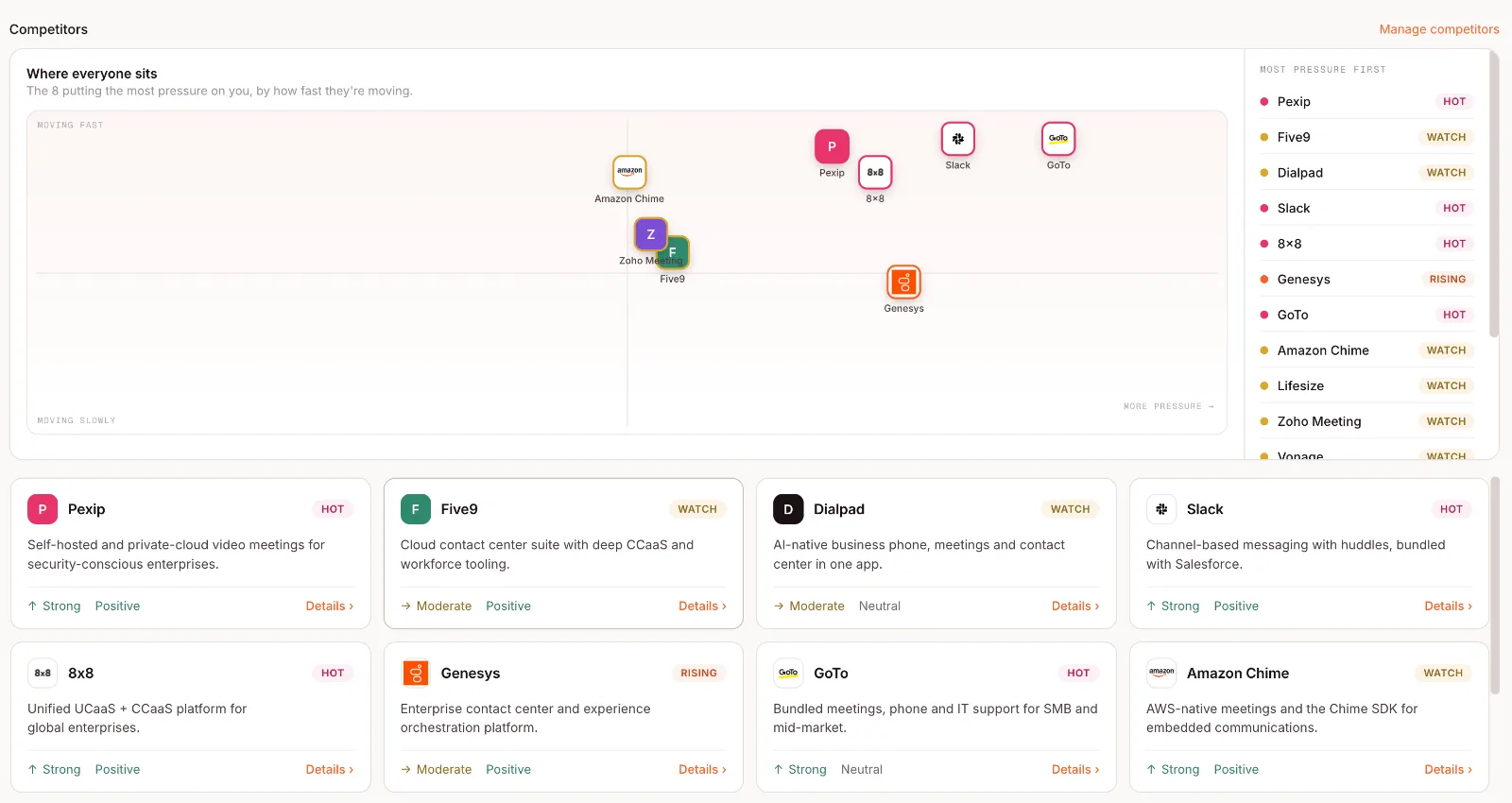
Understanding the Importance of Customer and Sales Intelligence
Every business interaction generates valuable information. Prospects communicate their expectations during sales conversations, customers share their experiences through feedback, and usage patterns reveal how people interact with products or services. However, this information often remains scattered across customer relationship management platforms, support systems, email conversations, and analytics dashboards.
Without a structured approach, teams may struggle to connect these signals and understand their broader implications. Sales managers might know that a deal was lost without understanding the actual reason behind the decision. Customer success teams may notice declining engagement only after a customer has already decided to leave. These gaps can lead to missed opportunities, inefficient spending, and preventable revenue losses.
Customer and sales intelligence helps bridge these gaps by organizing relevant information and highlighting patterns that influence business outcomes. Instead of relying entirely on assumptions, organizations can use evidence to understand customer expectations, identify recurring challenges, and prioritize actions that deliver measurable improvements.
Turning Lost Deals Into Valuable Business Lessons
Losing a sales opportunity does not necessarily mean that a product or service lacks value. Prospects may choose competitors because of pricing differences, missing features, implementation concerns, unclear communication, or a mismatch between their requirements and the proposed solution. Understanding these reasons is essential for building a more effective sales strategy.
A structured win-loss process helps businesses examine the complete decision-making journey, from the first conversation to the final purchasing outcome. By collecting feedback from prospects and comparing successful opportunities with unsuccessful ones, organizations can identify the factors that influence buying decisions.
For example, a company might discover that its sales representatives frequently lose deals because prospects do not understand the practical value of a proposed solution. In another situation, the analysis might reveal that implementation timelines are a more important consideration than pricing. These findings enable sales leaders to refine their messaging, improve product demonstrations, and address objections more effectively.
Over time, consistent analysis can also reveal competitive trends. Businesses can determine which features attract buyers, where competitors have an advantage, and which customer segments are most likely to convert. These insights help organizations allocate resources strategically instead of making changes based on isolated feedback or personal opinions.
Predicting Customer Churn Before It Becomes a Revenue Problem
Customer retention is a major consideration for businesses that depend on recurring revenue, long-term contracts, or repeat purchases. Acquiring new customers requires investment in marketing, sales, onboarding, and support. When existing customers leave unexpectedly, companies may struggle to maintain predictable revenue and achieve their growth targets.
Churn prediction software helps organizations identify patterns associated with customers who may be considering leaving. Depending on the available data and analytical capabilities, these systems can evaluate indicators such as declining product usage, reduced engagement, repeated support requests, missed renewals, or changes in purchasing behavior.
The objective is not simply to label customers as high-risk. It is to provide teams with enough time and context to investigate potential problems and take appropriate action. A customer who stops using an important feature might need additional training, while another who raises repeated complaints may require faster technical support or a conversation with an account manager.
Predictive insights can also help businesses distinguish between different types of retention challenges. Some customers leave because the product does not meet their needs, while others may struggle with onboarding, experience limited perceived value, or encounter budget restrictions. Understanding these differences allows teams to design more relevant retention strategies instead of sending identical offers or generic messages to every at-risk account.
Connecting Sales Performance With Customer Retention
Sales effectiveness and customer retention are closely connected, even though organizations often manage them as separate functions. The promises made during the sales process influence customer expectations after purchase. If those expectations do not match the actual product experience, dissatisfaction can develop and eventually lead to churn.
Connecting sales intelligence with customer success data helps organizations identify these disconnects. For instance, a business may discover that customers acquired through a particular sales approach tend to disengage after onboarding. Further investigation could reveal that certain capabilities were presented too broadly or that the implementation requirements were not clearly explained.
These findings allow teams to improve qualification criteria, establish more realistic expectations, and communicate product capabilities accurately. Marketing teams can use the same insights to refine their messaging, while product teams can identify recurring requests or usability challenges that deserve attention.
When departments share information, the entire organization benefits from a more consistent understanding of customer needs. Sales teams gain insight into the long-term consequences of their decisions, customer success teams understand the expectations customers bring into the relationship, and leadership can evaluate growth through both acquisition and retention.
Making Better Decisions With Data-Driven Insights
The value of business intelligence depends on how effectively organizations translate findings into action. Collecting information without establishing clear priorities can create additional complexity rather than improve performance. Businesses should therefore connect their analytical efforts to specific goals, such as improving conversion rates, increasing renewal rates, reducing preventable churn, or shortening sales cycles.
Reliable data is an important starting point. Organizations should establish consistent definitions for won and lost opportunities, maintain accurate customer records, and collect feedback at appropriate stages of the customer journey. Incomplete information can weaken analytical results, so teams should regularly review data quality and address inconsistencies.
Interpretation is equally important. A predictive score or recurring sales objection should be treated as a signal for investigation, not an unquestionable conclusion. Teams need to consider customer context, validate assumptions, and determine whether an intervention is appropriate. Combining quantitative metrics with direct customer feedback can provide a more balanced view of the challenges affecting business performance.
Organizations should also measure the outcomes of their actions. If a revised sales presentation is introduced, teams can compare conversion rates before and after the change. If a retention campaign targets customers showing reduced engagement, businesses can evaluate whether the intervention improves renewals or product adoption. This continuous improvement process turns analytics into an operational advantage.
Building a More Proactive Growth Strategy
A proactive growth strategy focuses on understanding potential problems before they become expensive setbacks. Instead of waiting for quarterly reports to reveal declining performance, organizations can monitor important indicators and respond when meaningful changes occur.
Hyperorbit.ai provides a relevant starting point for businesses exploring how customer intelligence and analytical capabilities can support more informed decisions. By focusing on the relationship between sales outcomes, customer expectations, and retention challenges, organizations can develop a clearer picture of where improvements are needed and which opportunities deserve attention.
The most effective approach combines technology with collaboration. Sales representatives need to share insights from prospect conversations, customer success teams must communicate recurring concerns, and leadership should ensure that findings influence planning and resource allocation. Technology can make patterns easier to identify, but meaningful improvement depends on teams taking ownership of the actions that follow.
The Future of Sustainable Business Growth
As markets become more competitive and customer expectations continue to evolve, organizations must develop a deeper understanding of the factors that influence purchasing decisions and long-term loyalty. Businesses that connect sales feedback, customer behavior, and performance metrics are better positioned to identify weaknesses, adapt to changing needs, and strengthen their competitive advantage.
Investing in churn prediction software can help companies move from reactive retention efforts toward earlier, more informed interventions. When these insights are combined with systematic win-loss reviews, businesses can improve the quality of customer acquisition while reducing avoidable losses after the sale. The result is a more connected approach to growth, where sales, customer success, and leadership teams work from a shared understanding of customer needs.
Ultimately, sustainable growth is not achieved simply by winning more deals or acquiring more customers. It comes from understanding why customers make their decisions, delivering on expectations, and continuously improving the experience that follows. Organizations that turn these lessons into consistent action can build stronger relationships, make smarter investments, and create a more resilient foundation for long-term success.

Comments
Post a Comment