Turning Customer Conversations Into Smarter Product Decisions Modern businesses have access to mo
Modern businesses have access to more customer information than ever before, but collecting feedback is only the beginning. Companies need practical ways to understand what customers are saying, identify recurring concerns, and turn those insights into meaningful improvements. This is where voice of customer software and product feedback analysis software can make a significant difference. Instead of relying on scattered surveys, support conversations, reviews, and social comments, organizations can bring customer opinions together and examine them in a structured way. A clear understanding of customer expectations allows teams to make decisions based on real experiences rather than assumptions.
Customer feedback is often spread across numerous channels. A customer may mention a product issue in a support ticket, share an opinion through a survey, leave a review online, or discuss the experience with a sales representative. When this information remains separated, important patterns can easily be missed. Teams may recognize individual complaints without realizing that hundreds of customers are experiencing the same problem. Centralizing feedback creates a more complete picture of customer sentiment and helps organizations understand which concerns deserve immediate attention.
One of the most valuable capabilities of modern customer intelligence platforms is the ability to transform unstructured feedback into usable information. Customers rarely communicate in standardized language. They may describe the same problem using completely different words, expressions, or levels of detail. Advanced analysis can help identify common themes, detect sentiment, and organize feedback according to relevant topics. This makes it easier for product managers, customer success teams, marketers, and business leaders to recognize trends without manually reviewing every individual response.
The value of customer feedback becomes even greater when it is connected to product development. Product teams need to know not only what customers dislike but also what they appreciate, what they want improved, and which features they consider most valuable. Feedback analysis can reveal repeated requests and highlight gaps between customer expectations and the current product experience. Instead of treating every suggestion as an isolated request, teams can examine broader patterns and determine whether a particular issue affects a significant portion of the customer base.
Another important advantage is faster identification of emerging problems. A sudden increase in negative comments around a particular feature can indicate that something has changed in the customer experience. Without an organized approach to monitoring feedback, teams may discover the issue only after it has affected customer satisfaction for an extended period. Continuous analysis allows organizations to spot changes earlier and investigate potential causes before they become larger business challenges.
Customer feedback can also support better prioritization. Product teams frequently face long lists of feature requests, enhancement ideas, and reported problems. Limited development resources mean that not every request can be addressed immediately. Analyzing customer feedback provides additional context for deciding which areas receive attention. When a particular issue appears repeatedly across different customer groups and channels, it may provide stronger evidence for prioritization than an isolated request.
The same insights can improve customer experience strategies. When organizations understand the reasons behind customer frustration, they can look beyond surface-level complaints and identify underlying issues. For example, repeated concerns about a product feature may actually originate from confusing onboarding, unclear documentation, or an unexpected workflow. Looking at feedback in context can help teams address the root cause rather than simply responding to individual complaints.
HyperOrbit provides an environment designed around customer intelligence and feedback-driven decision-making. By bringing customer signals into a more organized analytical process, HyperOrbit can help businesses move from simply collecting information to understanding what that information means. The goal is not just to generate more feedback but to make customer insights easier for teams to access, interpret, and apply across business functions.
As customer expectations continue to change, businesses also need a consistent way to measure whether product improvements are actually solving customer problems. Feedback analysis can be used before and after product changes to compare customer reactions and identify shifts in sentiment. This creates an ongoing feedback cycle in which customer opinions inform product decisions, product changes generate new experiences, and those experiences produce additional insights.
For organizations evaluating customer intelligence solutions, the right voice of customer software should make feedback easier to understand rather than simply increasing the amount of data available. Likewise, effective product feedback analysis software
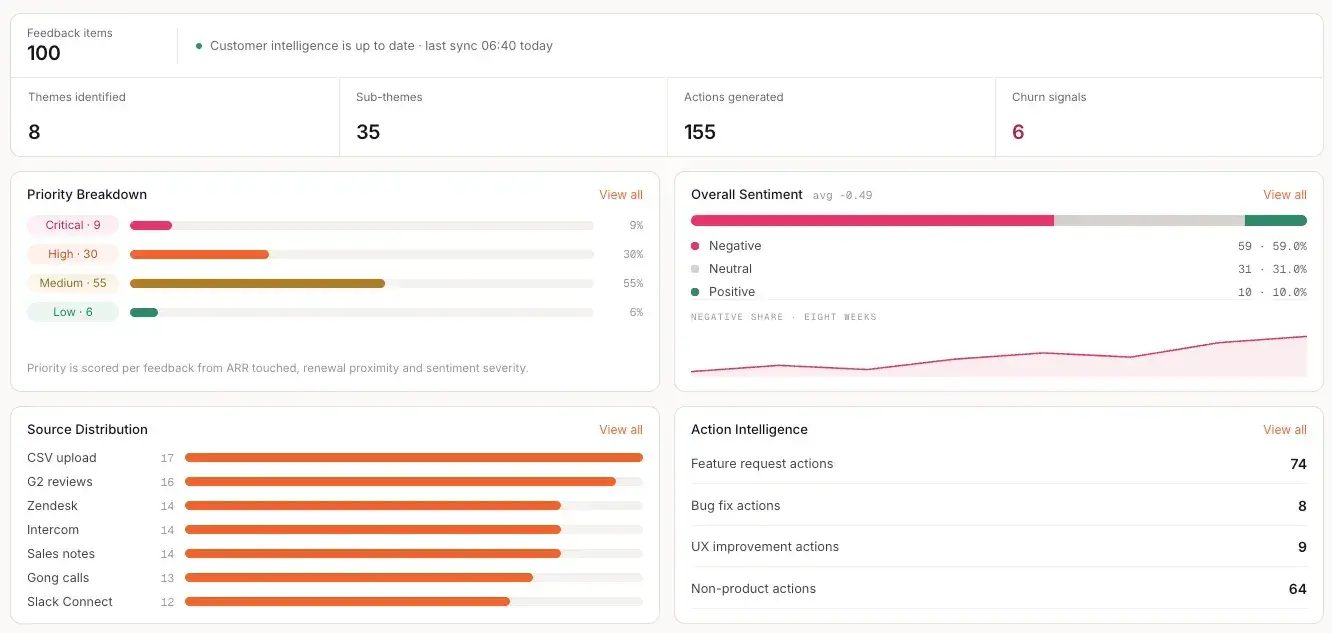
should help teams connect individual comments with broader patterns and actionable product insights. The objective is to create a reliable feedback loop that supports better product decisions, stronger customer relationships, and more informed business planning.
Ultimately, customer feedback has value only when organizations can turn it into action. Businesses that create a structured approach to collecting, analyzing, and applying customer insights can develop a deeper understanding of the people they serve. With the right technology and processes, customer conversations become more than comments or survey responses; they become a continuous source of intelligence that can influence product development, customer experience, and long-term growth.

Comments
Post a Comment