Turning Competitive Signals Into Smarter Customer Growth In a market where customer expectations
In a market where customer expectations and competitive movements can change rapidly, businesses need more than scattered information to make confident decisions. A modern customer intelligence strategy brings together market signals, customer conversations, competitor activity, and business trends to create a clearer picture of what is happening. For teams exploring a Klue alternative, the goal is often to find a solution that can transform complex intelligence into practical insights without creating unnecessary operational complexity. A thoughtful customer intelligence platform comparison can help organizations understand which capabilities matter most for their sales, marketing, product, and strategy teams.
Choosing the right intelligence technology requires looking beyond a long list of features. Every organization has different workflows, data sources, reporting requirements, and strategic priorities. While one platform may be designed around a particular competitive intelligence workflow, another may provide broader capabilities for discovering market opportunities and understanding customer behavior. This is why companies considering a Klue alternative should first identify how their teams currently collect, analyze, and share intelligence across the organization.
Customer intelligence has become increasingly important because buying journeys are no longer simple or predictable. Prospects research products across multiple channels, existing customers continuously reassess their options, and competitors can introduce new offerings with little warning. Without a centralized way to interpret these signals, valuable information can remain trapped inside CRM records, sales conversations, support interactions, online discussions, or internal documents.
A modern intelligence platform can help organizations connect these fragmented signals and turn them into information that teams can actually use. Sales representatives may need insights that help them understand an account before an important conversation. Marketing teams may want to identify changes in customer sentiment or emerging themes. Product teams may need to recognize recurring customer needs, while executives may require a broader view of market movement. Bringing these perspectives together can create a more consistent understanding of customers and the competitive environment.
Another important consideration is data accessibility. Intelligence is only useful when relevant information can be discovered at the right time. Teams that have to manually search through multiple systems may overlook important details or spend too much time collecting information instead of acting on it. Automation, intelligent search, contextual analysis, and centralized information can reduce this friction and make intelligence more accessible throughout an organization.
The quality of insights also matters. Simply collecting large amounts of information does not necessarily produce better decisions. Businesses need technology capable of identifying meaningful patterns and distinguishing important signals from background noise. A platform that supports contextual analysis can help teams move from asking what happened to understanding why a particular development may matter to customers, competitors, or future opportunities.
Integration should also play a central role when evaluating customer intelligence technology. Organizations often rely on CRM platforms, communication tools, sales enablement systems, analytics applications, and other business software. If intelligence exists separately from these workflows, adoption can become difficult. A well-connected solution can make insights available closer to the point where teams already work, helping employees incorporate intelligence into everyday activities rather than treating it as a separate research task.
Ease of use is another factor that should not be overlooked. Even a technically capable platform may deliver limited value if employees struggle to understand or access its information. Different users should be able to find relevant intelligence without requiring extensive training or specialist knowledge. Clear interfaces, searchable information, useful context, and straightforward workflows can all contribute to stronger adoption.
For businesses conducting a customer intelligence platform comparison
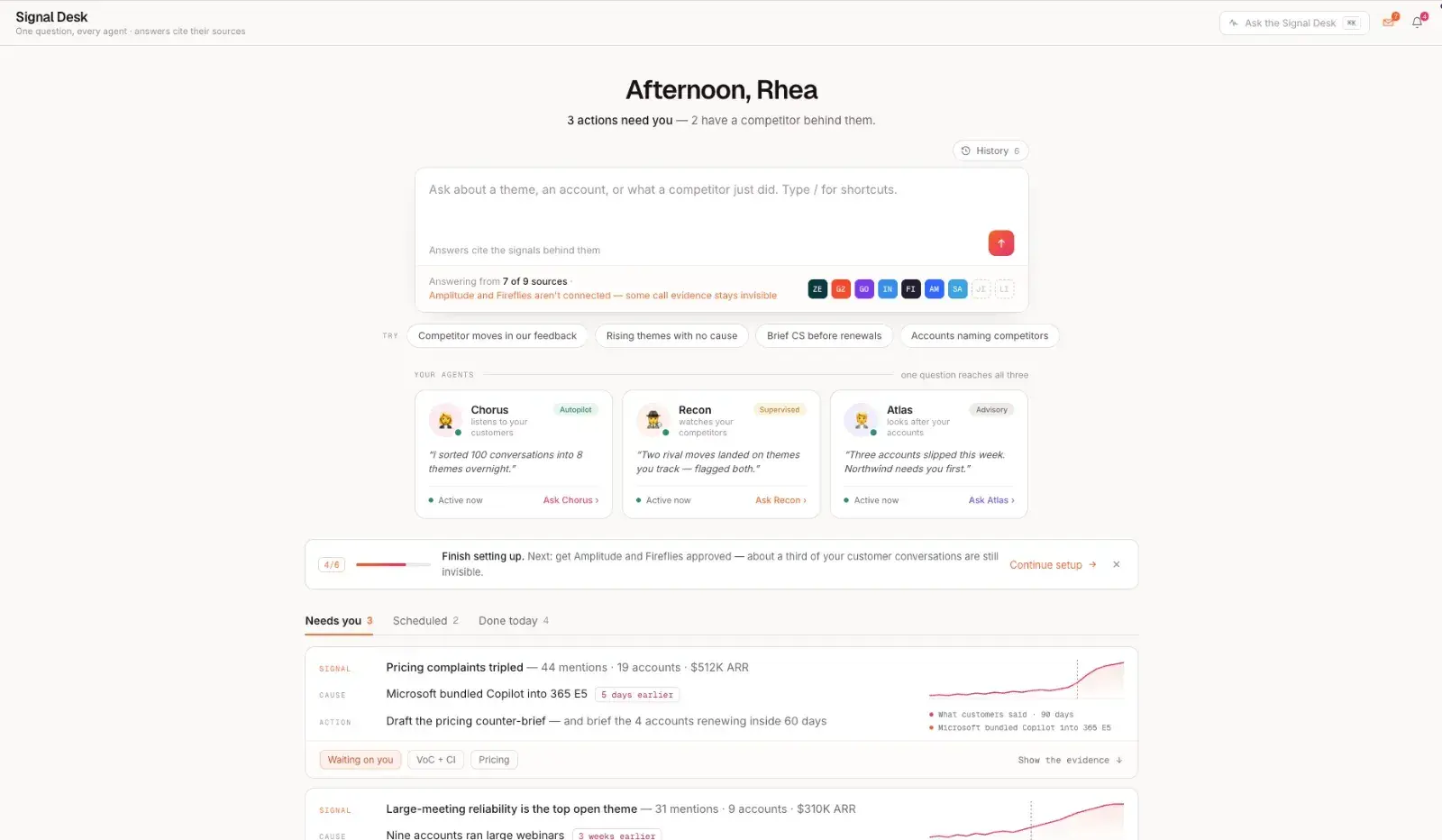
, it is also useful to examine how each solution supports collaboration. Competitive and customer intelligence rarely belongs to one department. Sales may discover an objection, marketing may identify a new market message, and product teams may notice a recurring feature request. When these observations can be shared and connected, organizations can build a more complete understanding of the market instead of maintaining isolated departmental perspectives.
HyperOrbit.ai is designed around the broader idea that intelligence should help businesses understand customers and markets more effectively. Rather than treating intelligence as static information, organizations can consider how technology can support continuous discovery, interpretation, and action. This approach can be particularly relevant for teams looking beyond traditional competitive intelligence workflows and seeking a more connected way to work with customer and market signals.
Security and governance should also be considered during the evaluation process. Customer and competitive information can contain commercially sensitive material, making access controls and responsible data handling important considerations. Businesses should assess how information is collected, stored, shared, and managed before introducing any intelligence platform into their broader technology environment.
Ultimately, selecting an intelligence platform should begin with business objectives rather than software features alone. Teams should consider which questions they need answered, where their current intelligence gaps exist, which departments need access, and how insights will influence actual decisions. This framework makes it easier to distinguish between tools that simply collect information and platforms that can become part of a company's everyday decision-making process.
For organizations exploring a Klue alternative, evaluating workflow flexibility, intelligence discovery, integrations, usability, and the ability to connect customer and market signals can provide a useful starting point. At the same time, a detailed customer intelligence platform comparison can help decision-makers understand how different approaches align with their specific operational requirements. The right technology ultimately depends on the organization's goals, existing systems, users, and preferred way of turning intelligence into action.
As customer expectations continue to evolve and competitive markets become increasingly dynamic, intelligence is becoming an ongoing business capability rather than an occasional research activity. Companies that can consistently gather relevant signals, understand their significance, and distribute useful insights across teams can create a stronger foundation for informed planning. By evaluating platforms through this broader lens, organizations can make technology decisions based on how effectively the solution supports real business workflows and long-term customer understanding.

Comments
Post a Comment